7-Day Lemosho Route Kilimanjaro Climb

Every other route up Kilimanjaro starts on the mountain’s south or west side. Rongai is the exception — the only trail that approaches from the north, near the Kenyan border, through drier terrain and a fraction of the foot traffic found on routes like Machame. It’s also the one route where you genuinely see two different sides of the mountain: you ascend through the quiet northern wilderness and descend an entirely different way, via the Marangu route, ending your trip having crossed Kilimanjaro rather than retraced your own steps. This itinerary runs 9 days in total: a night in Arusha before and after the climb, bookending seven days on the mountain.

Below is the full day-by-day plan, an at-a-glance overview, and exactly what’s included.

Trip Highlights

  • The only route up Kilimanjaro’s northern side, starting near the Kenyan border through quiet forest and farmland.
  • Kilimanjaro’s driest route — the north face sits in a rain shadow, making Rongai the best choice if your dates fall during the rainy season.
  • A genuinely gradual ascent profile, well suited to first-time high-altitude trekkers without sacrificing summit success.
  • Close-up views of Mawenzi Peak, Kilimanjaro’s dramatic second summit, with a dedicated acclimatization day camped in its shadow.
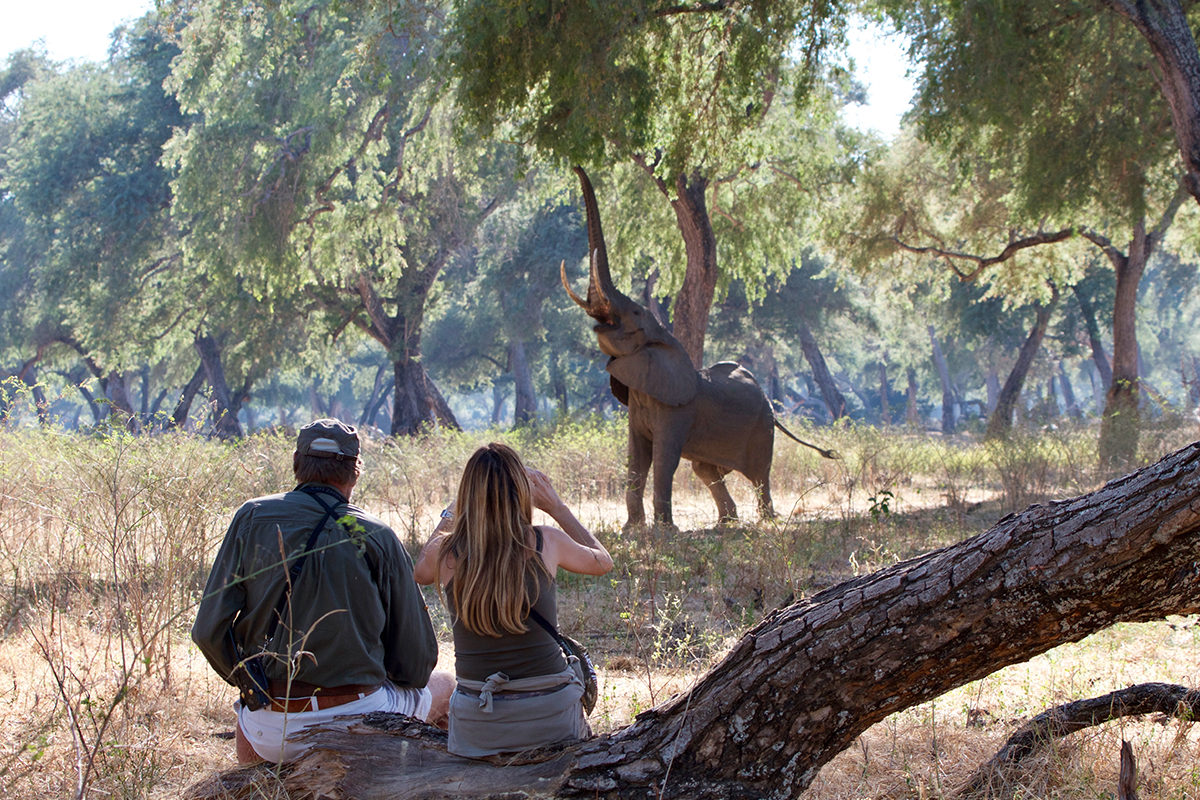
  • A real chance of wildlife on the lower slopes — colobus monkeys are common, and elephants or buffalo are sometimes spotted looking out over Kenya’s plains.
  • A full traverse of the mountain — you ascend via Rongai and descend via the Marangu route, crossing from the remote north side to the lusher south side, with a hut stay at Horombo on the way down.
  • A comfortable night in Arusha before and after the climb, so you’re not roughing it on either end of the trek.
  • From $1,950 per person, depending on group size — the same summit, a quieter route, and a genuinely different side of the mountain.
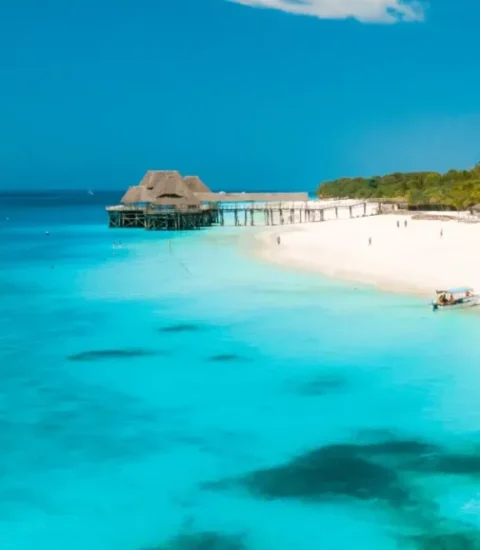
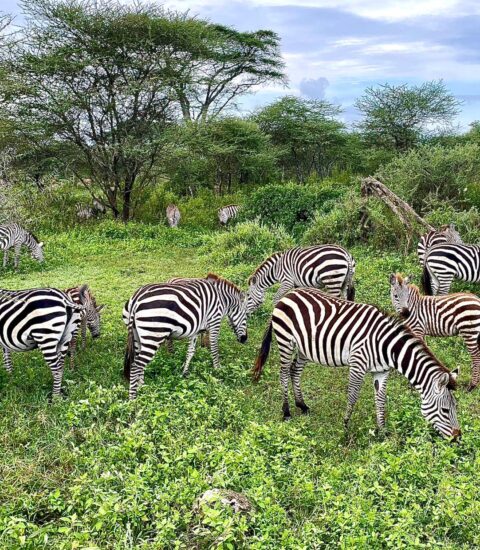
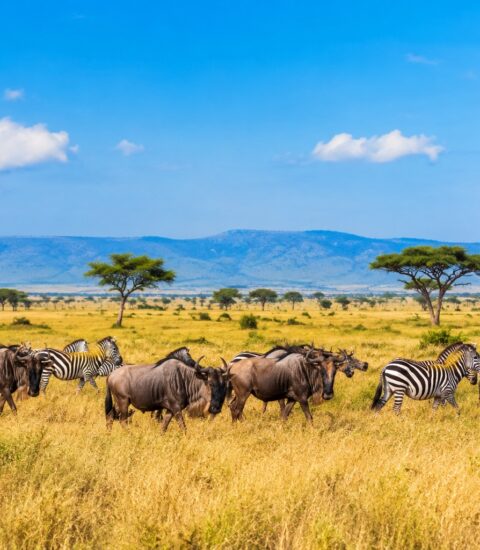
  • The option to extend with a safari or a Zanzibar beach stay once you’re off the mountain.

Day-by-Day Itinerary

Land at Kilimanjaro International Airport and meet your guide for a welcome briefing — a chance to go over the week ahead, check your gear, and settle any last-minute arrangements before the climb begins. Dinner and overnight at Raha Wildlife Resort.

A scenic drive around the mountain’s eastern side brings you to Rongai Gate near the village of Nale Moru (~6,400ft), close to the Kenyan border. After registering with park rangers, the trail climbs gently through maize and potato fields before entering forest — one of the better stretches on the whole mountain for spotting black-and-white colobus monkeys. The forest thins into moorland at Simba Camp, with wide views out over Kenya’s plains.

Hiking: 3–5 hours · Overnight altitude: ~8,650ft

A steady climb continues across open moorland, with clear views of Kibo’s eastern ice fields as you go. Partway through the day the trail leaves the main path, striking out across the moorland toward the jagged silhouette of Mawenzi Peak, before reaching camp near Kikelewa Cave for the night.

Hiking: 5–6 hours · Overnight altitude: ~11,800ft

A short but noticeably steep climb up grassy slopes rewards you with sweeping views back across the wilderness you’ve just crossed. The vegetation thins out and disappears entirely as you leave the moorland behind and enter alpine desert, arriving at Mawenzi Tarn — a dramatic camp set directly beneath Mawenzi’s towering spires.

Hiking: 3–4 hours · Overnight altitude: ~14,100ft

A full day built around one job: letting your body adjust to the altitude before you go higher. Rather than a day of rest, expect a shorter guided walk up the surrounding ridges — high enough to aid acclimatization, low enough to sleep comfortably back at camp. Afternoons here are free to relax and take in the views of both Mawenzi and Kibo.

Overnight altitude: ~14,100ft (second night)

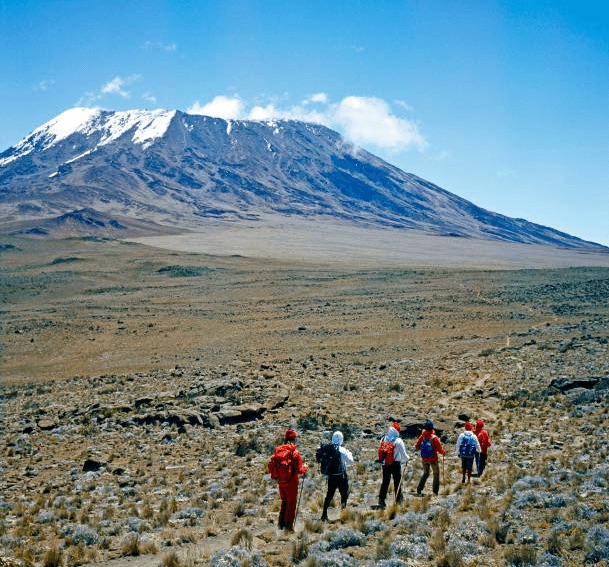
The trail crosses the Saddle, a stark, wide expanse of alpine desert between Mawenzi and Kibo, with Kibo’s summit dome in view for most of the day. The terrain here is dry, barren, and exposed — a real contrast to the greener days lower on the mountain. An early dinner and an attempt at sleep follow at Kibo Hut; you’ll be woken around 11:30pm to begin the summit push.

Hiking: 4–5 hours · Overnight altitude: ~15,430ft

Depart around midnight, climbing steadily by headlamp toward Gilman’s Point (~18,600ft) on the crater rim, where the summit finally feels within reach. From there it’s a further push along the rim to Uhuru Peak — the summit of Kilimanjaro and the highest point in Africa. After time to take it in, descend back to Kibo Hut for a short rest, then continue down through the moorland to Horombo Hut — your first and only night in a mountain hut rather than a tent, on the Marangu side of the mountain.

Summit altitude: ~19,341ft · Overnight altitude: ~12,200ft

A long, mostly downhill trek through the moorland and back into rainforest brings you to Marangu Gate, where you’ll collect your summit certificate and say goodbye to your mountain crew. Drive back to Arusha for a hot shower and a celebratory dinner.

Hiking: 5–6 hours

Transfer to Kilimanjaro International Airport for your flight home — or continue on to a safari or Zanzibar extension (ask us for a free quote).

📦 What's Included in the Safari Price

Inclusions & Exclusions

Included:

  • 2 nights’ accommodation in Arusha (Days 1 & 9) at Raha Wildlife Resort
  • 6 nights on the mountain (5 in mountain tents, 1 in a mountain hut at Horombo)
  • All Kilimanjaro National Park fees, camping/hut fees, and rescue fees
  • A certified mountain guide, assistant guides, porters, and a cook
  • All meals while on the mountain (breakfast, lunch, dinner)
  • Filtered drinking water throughout the climb
  • Summit certificate on successful completion

Excluded:

  • International flights
  • Tanzania visa fees
  • Travel insurance (make sure yours covers high-altitude trekking and emergency evacuation)
  • Tips for your mountain crew — a meaningful and expected part of the culture on Kilimanjaro; ask us for guidance on typical amounts
  • Personal climbing gear (sleeping bag, trekking poles, and similar items — gear rental can be arranged on request)
  • The safari or Zanzibar extension (quoted separately, free of charge)

Rongai vs. Machame: Which Route Is Right for You?

Both routes run 9 days total from Arusha and reach the same summit — the difference is in the experience along the way.

  • Choose Rongai if: your dates fall in the rainy season (April–May or November), you want the quietest, least crowded route, or you’d prefer a more gradual, beginner-friendly ascent profile.
  • Choose Machame if: you want more varied scenery across the climb itself, don’t mind busier trails, and are drawn to landmarks like the Barranco Wall and Lava Tower.

Not sure which fits you best? Tell us your travel dates and fitness level and we’ll recommend one.

Good to Know

  • This is a serious physical undertaking, not a casual hike: the gradient is gentler than Machame, but the altitude gain and summit night are just as demanding — good cardiovascular fitness makes a real difference.
  • The extra night at Mawenzi Tarn matters: skipping it (as the shorter 6-day version of this route does) meaningfully lowers summit success rates — we only recommend the 7-day itinerary for exactly this reason.
  • Best time to climb: Rongai is the one route that works well even in the rainy season, since the northern slopes sit in a rain shadow. That said, June to October and January to mid-March remain the most reliably dry and stable months across the whole mountain.
  • Pack for extremes and for dust: the northern route is drier and dustier than the southern trails — gaiters are worth packing alongside your usual layered clothing, warm sleeping bag, and headlamp for summit night. Ask us for a full packing list when you book.
  • Talk to your doctor before you go, particularly about altitude sickness prevention and any medication (such as Diamox) you might want to discuss in advance

Ready to Book Your Kilimanjaro Climb?

Rongai’s remote camps have limited space, and dry-season dates — as well as the rainy-season windows this route is best suited for — both fill up ahead of time. The earlier you lock in your date, the more flexibility you’ll have on guides and permits.

The fastest way to get a real answer: message us on WhatsApp — most questions get a same-day reply with live availability for your dates.

📱 WhatsApp: +255 795 343 555 — tap to chat now

Email: bookings@bonafidetanzaniandreams.com

Website: bonafidetanzaniandreams.com

From $1,950 to $1,980 per person depending on group size — get in touch for a free, no-obligation quote confirmed for your exact dates.