
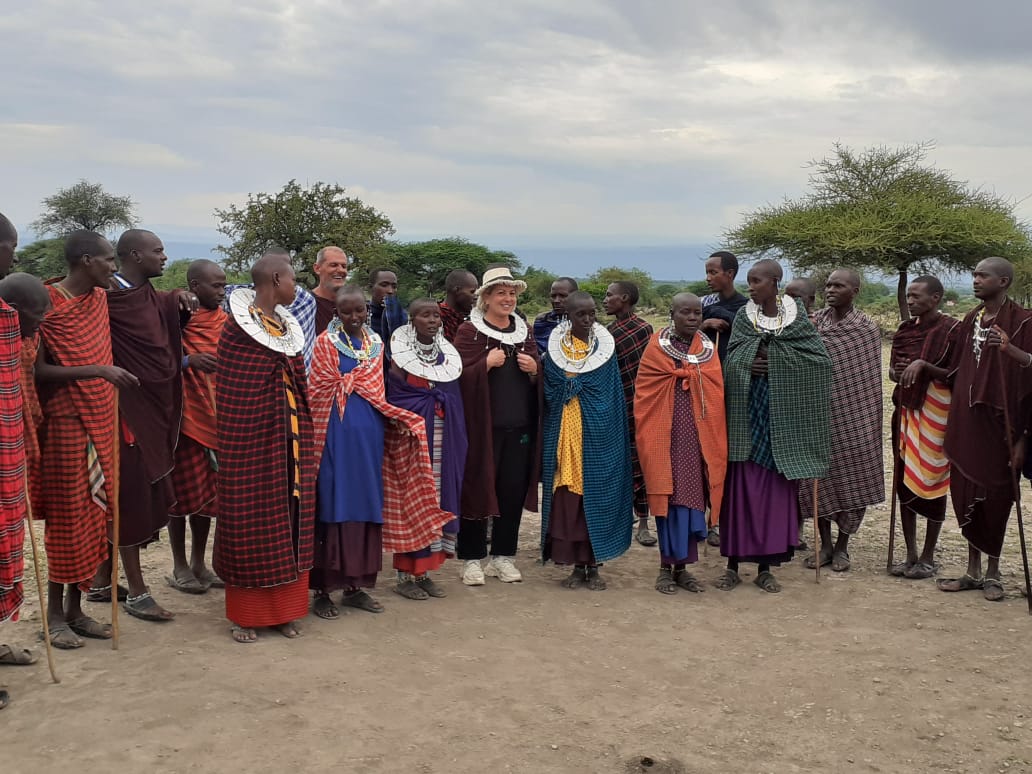

The Maasai and the Serengeti: Origins, Migration, Great Laibons, and the Making of Northern Tanzania’s Most Iconic Culture
Most historians, anthropologists, and linguists agree that the Maasai belong to the Eastern Nilotic peoples, whose ancestors originated in the Nile Valley region — in areas that are now South Sudan, southeastern Sudan, and parts of Ethiopia. The Maasai speak Maa, a Nilotic language related to the languages spoken by other pastoral communities such as the Samburu and Turkana. The migration southward happened gradually, over several centuries, rather than as a single movement — and Maasai oral tradition itself tells a different story, holding that the community’s ancestors and their cattle have always belonged to this land, a gift from the god Enkai; historians treat the Nile Valley migration account and Maasai oral tradition as two different, both valuable, ways of understanding the same deep history.
The Maasai migration into East Africa
1400–1600 AD: the move south
Maa-speaking communities began moving south from the Nile Valley through South Sudan, northern Kenya, the Turkana Basin, and the Great Rift Valley. The migration was driven by the search for pasture and water, population growth, livestock expansion, and competition with neighbouring groups.
1600–1800 AD: rapid expansion
The Maasai expanded rapidly across East Africa, occupying large territories extending across the Laikipia Plateau, Narok, Kajiado and Amboseli in Kenya, and Longido, Monduli, Ngorongoro, Loliondo, Simanjiro, Kiteto and parts of the Serengeti ecosystem in Tanzania. This period is often called the Golden Age of Maasai expansion — at its height, colonial-era observers described Maasai territory as stretching roughly 80,000 square miles, from the shores of Lake Turkana in Kenya to Mount Meru near Arusha in Tanzania.
How the Maasai entered Tanzania
The Maasai entered present-day Tanzania mainly through three corridors: the Namanga corridor along the modern Tanzania–Kenya border; the Longido area, one of the earliest Maasai settlement zones in Tanzania; and the Amboseli–Ngorongoro route, which provided access to rich grazing lands and water sources.
First Maasai settlement areas in Tanzania
Longido
One of the first major Maasai strongholds in Tanzania, valued for its permanent water sources, excellent grazing land, and easy movement between Kenya and Tanzania.
Monduli
Became a major Maasai centre thanks to its good climate, fertile grazing lands, and strategic location — and, as later sections of this article explore, a place with a direct connection to one of the most famous individuals in Maasai history.
Ngorongoro Highlands
One of the most important historical Maasai regions, valued for reliable rainfall, permanent water, and rich pasture.
Loliondo
Used extensively for seasonal grazing and still an important Maasai area today.
Simanjiro Plains
A large grazing territory east of Tarangire National Park, important for livestock movements.
Who lived in northern Tanzania before the Maasai?
- Hadzabe (Hadza) — hunter-gatherers around Lake Eyasi and the Yaeda Valley, among the oldest surviving communities in East Africa.
- Datoga — pastoralists and skilled blacksmiths, occupying areas around Ngorongoro, Lake Eyasi, and the Serengeti ecosystem.
- Iraqw — agricultural communities around Karatu and the Mbulu Highlands; many Iraqw communities still live there today.
Maasai arrival in the Serengeti — and where the name comes from
Most scholars believe the Maasai entered the Serengeti ecosystem between 1700 and 1800 AD, during the height of their territorial expansion. The Maasai referred to the vast grasslands as Siringet, meaning “the endless plains” — the word that later became Serengeti, the name now used worldwide.
The Serengeti offered vast grazing areas ideal for cattle, reliable water sources including the Mara River, the Grumeti River, and seasonal streams, open plains suitable for livestock management and movement, and seasonal pasture during dry periods.
The Serengeti was never a permanent Maasai settlement in the modern sense. The Maasai were semi-nomadic pastoralists who lived in manyattas (bomas) — temporary or semi-permanent settlements built from wood, mud, grass, and cow dung — moving according to rainfall, water availability, and grazing conditions.
The Maasai Golden Age (1700–1850)
This period marked the height of Maasai influence. The Maasai controlled large areas from central Kenya to northern Tanzania, becoming one of the most powerful communities in East Africa. Large livestock herds provided wealth, food security, social status, and military strength.
Famous Maasai leaders and laibons
Maasai society was never led by kings in the conventional sense. For roughly two centuries, spiritual authority rested instead with a line of laibons (iloibonok) — prophet-healers from a single hereditary family — whose influence over war, healing, and prophecy shaped Maasai history as much as any warrior chief.
Kidongoi: the legendary first laibon
Maasai oral tradition traces the laibon lineage to Kidongoi, a boy said to have been found alone on a hillside near Ngong by Maasai hunters and raised within the community. His descendants inherited what Maasai tradition holds to be hereditary prophetic power, founding the Inkidongi (Loonkidongi) clan from which every laibon since has come.
Mbatian ole Supeet (laibon, 1866–1890): the greatest of the laibons
Mbatian, also known as Mbatian ole Supeet, succeeded his father Supeet as laibon in 1866 and is widely regarded as the most influential laibon in Maasai history. Over 24 years, he united previously rival Maasai sections — including the Ilnkisongo, living in what is now Tanzania and parts of Kenya, and the Ilpurko, of Narok and Kajiado — into a period of relative unity and territorial strength that colonial-era settlers described as making the Maasai the effective “lords” of East Africa. Mbatian is remembered in Maasai oral tradition for prophecies foretelling the arrival of European colonizers and the coming of an “iron snake” — a railway — that would divide Maasai land, along with warnings of smallpox and cattle plagues to come. He died in 1890 and was buried at Oldonyo Orok (“Black Hill”) in the Namanga hills, on the modern Tanzania–Kenya border.
Lenana (Olonana) and Senteu (Sendeyo): succession and civil war
Mbatian’s succession triggered one of the most consequential disputes in Maasai history. According to Maasai oral accounts, Mbatian intended to pass his insignia to his elder son Senteu, but Mbatian’s younger son Lenana (Olonana) — born, according to some accounts, near Monduli in what is now Tanzania — overheard his father’s plan, presented himself first, and received the laibon’s insignia meant for his brother. The deception (often compared by historians to the biblical story of Jacob and Esau) triggered a civil war between the two half-brothers’ followers that, combined with disease and drought, is estimated to have halved the Maasai population before Senteu finally sued for peace with Lenana in 1902.
Lenana went on to become the figure the British colonial administration in Kenya recognised as “paramount chief” of the Maasai, signing the 1904 and 1911 Maasai Agreements that relocated Maasai communities in Kenya from the Rift Valley and Laikipia into designated reserves to make way for European settlement — agreements still debated today for how much genuine consent they represented. Lenana died in 1911; one of the peaks of Mount Kenya is named in his honour, as another is named for Mbatian.
Together, Kidongoi’s legendary founding of the laibon lineage and the historical rise and rupture of Mbatian, Lenana, and Senteu form the closest thing the Maasai have to a documented political history — a reminder that the community’s story in this era was shaped as much by spiritual leadership and internal succession politics as by migration and land.
The Emutai disaster (1883–1902)
The Maasai suffered a devastating period known as Emutai, meaning “time of disaster.” It combined rinderpest, which killed enormous numbers of cattle; smallpox, which affected human populations; severe drought, which destroyed pasture and water supplies; and the famine that followed. The Maasai lost much of their livestock and influence during this period — the same years in which Mbatian’s prophesied “iron snake” and European colonization were arriving on the ground.
Serengeti National Park and Maasai relocation
In 1951, the British colonial administration established Serengeti National Park to protect wildlife; at first, the park included much of the Serengeti and Ngorongoro areas. In 1959, the government created the Ngorongoro Conservation Area, and the Maasai were relocated from most of Serengeti National Park into Ngorongoro and the surrounding areas. The idea was to separate the two zones by purpose: the Serengeti for wildlife conservation, Ngorongoro for wildlife and human coexistence. Today the Maasai continue to live within the Ngorongoro Conservation Area.
Maasai relationship with wildlife
Historically, the Maasai depended primarily on cattle, sheep, and goats. Unlike many hunting communities, they generally did not rely heavily on wild animals for food. Because of this, wildlife populations often survived alongside Maasai pastoral systems — the Maasai coexisted with lions, elephants, wildebeest, zebras, and giraffes for centuries, a relationship conservationists still point to when discussing community-based conservation in the Serengeti-Ngorongoro ecosystem today.
The Maasai age-set system
The age-set system is one of the most important features of Maasai society. Every male belongs to a generation group that moves through life stages together, and the system organises leadership, defence, social responsibility, and community governance.
The five age grades
- Childhood (Layoni), roughly ages 0–14 — herding calves, learning traditions, assisting family members, and caring for small livestock.
- Junior warrior (Moran), roughly ages 15–30 — entered after initiation and circumcision. Morans protect cattle, defend the community, herd livestock long distances, participate in ceremonies, and maintain security; traditionally, morans were not expected to marry during this stage.
- Senior warrior — older morans gradually take on leadership roles, guiding younger warriors, assisting elders, and organising community activities.
- Junior elder, roughly ages 30–45 — the stage of marriage, family leadership, livestock management, and growing participation in community decisions.
- Senior elder, roughly ages 45–60+ — traditionally holds the community’s highest authority, responsible for governance, conflict resolution, religious leadership, and decision-making.
Leadership beyond the age grades
- The laibon serves as spiritual leader, ritual leader, healer, and advisor; historically, laibons such as Mbatian and Lenana also wielded significant political influence.
- The council of elders governs community affairs, marriage matters, land-use decisions, and conflict resolution.
- The morans (warriors) hold responsibility for security, livestock protection, and defence.
The role of women
Women do not belong to the male age-set system but play essential roles — traditionally building houses, managing households, preparing food, milking cattle, and raising children. Today many Maasai women are also entrepreneurs, teachers, tourism leaders, and conservation advocates.
Maasai areas in Tanzania today
- Arusha Region — Longido, Monduli, Arusha Rural
- Manyara Region — Simanjiro, Kiteto
- Ngorongoro Conservation Area
- Loliondo
These areas remain important centres of Maasai culture and pastoral life.
Historical timeline summary
- Before 1400 AD — Ancestors of the Maasai lived in the Nile Valley region.
- 1400–1600 AD — Migration south through South Sudan and northern Kenya.
- 1600–1800 AD — Expansion into Kenya and northern Tanzania.
- 1700–1850 AD — Golden Age of Maasai influence.
- 1700–1800 AD — Arrival in the Serengeti ecosystem and Ngorongoro Highlands.
- 1866–1890 — Mbatian ole Supeet unites the Maasai sections as the great laibon.
- 1890–1902 — Succession war between Lenana and Senteu; peace concluded in 1902.
- 1883–1902 — Emutai disaster: drought, rinderpest, smallpox, and famine.
- 1904 / 1911 — Maasai Agreements relocate Kenyan Maasai communities under British colonial rule.
- 1951 — Serengeti National Park established.
- 1959 — Ngorongoro Conservation Area established; Maasai relocated from most of Serengeti National Park.
- Today — The Maasai remain one of East Africa’s most influential communities, playing a vital role in conservation, tourism, livestock production, and cultural heritage throughout northern Tanzania.
Interesting fact for safari travelers
The name Serengeti comes from the Maasai word Siringet, meaning “the endless plains.” Although the Maasai no longer live within most of Serengeti National Park, their language, history, and cultural connection to the ecosystem remain deeply embedded in one of Africa’s most famous wildlife landscapes.
Frequently asked questions
Where did the Maasai originally come from? The Maasai are Eastern Nilotic people whose ancestors trace back to the Nile Valley region — South Sudan, southeastern Sudan, and parts of Ethiopia — migrating south from roughly 1400–1600 AD.
Who was Mbatian, and why is he important? Mbatian ole Supeet was the most influential Maasai laibon in history, uniting rival Maasai sections between 1866 and 1890 and remembered for prophecies about colonization that later came true.
What caused the split between Lenana and Senteu? A succession dispute after Mbatian’s death in 1890 — Lenana obtained the laibon’s insignia intended for his older brother Senteu, triggering a civil war that halved the Maasai population before peace in 1902.
Why is the Serengeti called the Serengeti? It comes from the Maasai word Siringet, meaning “the endless plains,” describing the grasslands the Maasai entered around 1700–1800 AD.
What was the Emutai? A combined disaster from 1883–1902 of rinderpest cattle disease, smallpox, drought, and famine that devastated Maasai herds and population.
Were the Maasai relocated when Serengeti National Park was created? Yes. Serengeti National Park was established in 1951 and the Ngorongoro Conservation Area in 1959; most Maasai were relocated from the park into Ngorongoro, where they still live today.
Who lived in northern Tanzania before the Maasai arrived? The Hadzabe (hunter-gatherers around Lake Eyasi), the Datoga (pastoralists and blacksmiths), and the Iraqw (agriculturalists of the Mbulu Highlands).